DEFENCE UK Integrated Review analysis
The UK’s defence and security posture on the move
Royal Aeronautical Society CEO, Sir BRIAN BURRIDGE FRAeS, with input from RAeS Specialist Groups, considers the implications of the UK’s recent Integrated Defence and Security Review and associated strategy papers.
 MoD/Crown Copyright
The scene was set for the Integrated Review of Security, Defence, Development and Foreign Policy (IR) with last year’s publication of The Integrated Operating Concept. This slim volume heralded that transformational change was afoot in the UK’s defence and security posture. It recognised that we are living in an era of constant competition within which the character of warfare was evolving rapidly. Two deductions about the concept followed: it represents the most significant change in UK military thought in several generations and that it would lead to a fundamental change to the way in which the military instrument of national power would be formulated and employed. Its key message was one of integration across the domains of national power. In parallel, the Science and Technology Strategy identified the five capability challenges for the subsequent IR to address and perhaps by which to judge its validity and that of its companion documents:
- Pervasive, full spectrum, multi-domain Intelligence, Surveillance and Reconnaissance (ISR)
- Multi-domain Command & Control, Communications and Computers (C4)
- Secure and sustain advantage in the subthreshold – the grey zone
- Asymmetric hard power – to target adversaries in new ways
- Freedom of access and manoeuvre
Successive defence reviews since the end of the Cold War have asserted the need for the UK to maintain ‘full spectrum’ capability. The nature of that spectrum has changed over time. However, most have aspired to that aim but few of the subsequent implementation plans have succeeded in doing so mainly because of inadequate finance. Recent international events have seen that spectrum enlarge at both ends. This is at the heart of the challenge for the IR and its more detailed sister papers, the Defence Command Paper (DCP) and the Defence and Security Industrial Strategy (DSIS). Topically, given that we are in the year of COP26, concluding this suite of policy was the publication of the MoD’s plan entitled Climate Change and Sustainability Strategic Approach.
Meeting the capability challenges
At the highest and most lethal end of capability, it came as a surprise to most that the nuclear warhead cap is to be enlarged from the currently planned 180 to 260 weapons. At the other end of the spectrum, the ‘grey zone’ is now seen as a reality with sub-threshold interventions that are difficult to attribute and hard to deter. Such threats range from the dissemination of fake news to the ‘badgeless’ application of low-level military violence: disruption, disinformation and deception are achieved through a wider variety of instruments. In response to these complex challenges, the term military capability takes on a new breadth. However, in this suite of documents, the reality of full-spectrum capability also rightly includes the space and cyber domains. In short, the nature of the battlespace itself is changing rapidly.
This shift requires the faster adoption of novel technology and greater agility in procurement in the search for highly flexible solutions that can be fielded quickly and applied across a range of scenarios within a defensible legal framework. In particular, the robustness of the rules-based international order is a decisive factor in maintaining global connectivity and, for example, providing international access for aviation and in harmonising standards and certification for aerospace. It also has a huge part to play in aviation’s ability to meet the climate change challenge. However, as staff colleges around the world drum into their students, planning is not the same as fighting. So, the acid tests for this review are: is there sufficient strategic focus on what our defence posture is aimed at achieving? is there the stability of intent over delivery? is it affordable? and are there enough suitably qualified people within the defence enterprise to deliver this degree of change? Without rehearsing the detail of the resulting inventory, this examination blends the three documents and takes an overall view through the air power and aerospace lens.
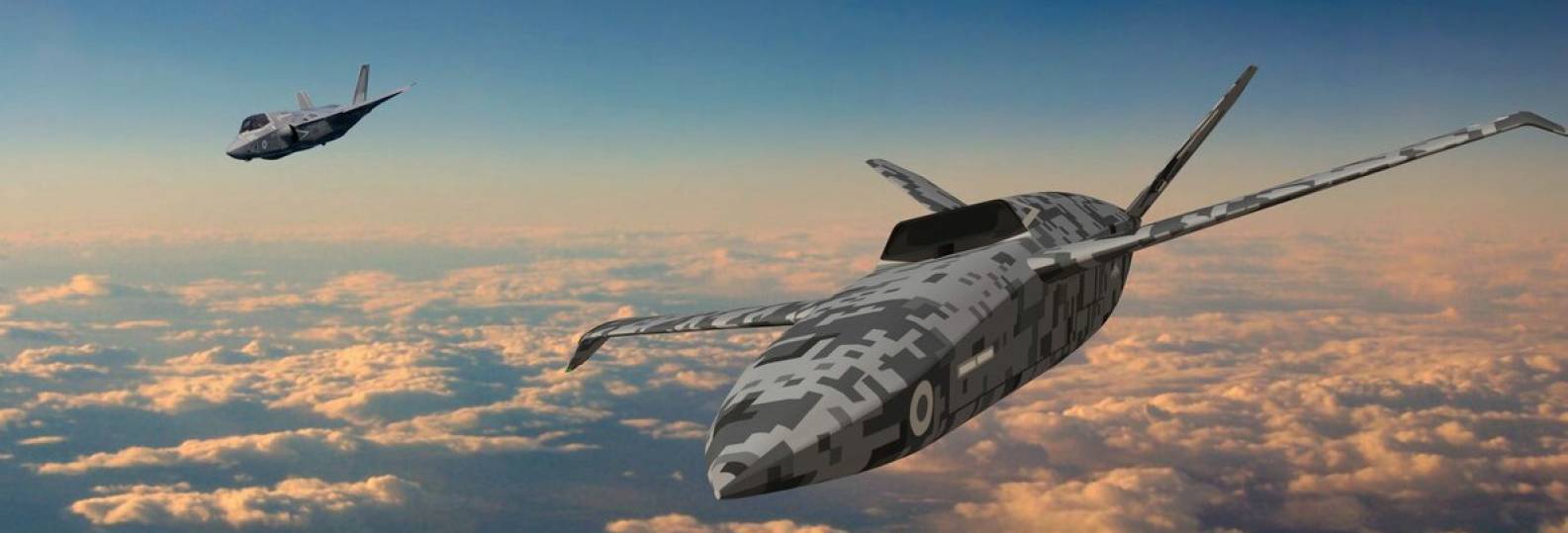 Drones in the form of the RAF’s LANCA ‘Loyal Wingman’ project and AI are set to receive a focus in future planning. MoD/Crown Copyright
The approach to technology
First, it is a great relief to see government focus on the science and technology ecosystem (S&T) and how this will impact research and development (R&D). These aspects represent the foundations of a defence industrial base that can realistically be regarded as a strategic national resource. It was in August 2019 that the prime minister set out his vision of the UK’s future as a science superpower. With Covid and Brexit trade dominating headlines since then, this is the first opportunity to put some detail around this lofty aspiration. There is certainly the recognition in the IR that the UK retains a world-class S&T ecosystem ranging from university research departments through to the laboratories of the major companies with a plethora of SMEs and start-ups in between. However, this ecosystem has to be nurtured through programmes and funding. The latter remains a concern across the research community given the pressures on public expenditure but the DCP confirms a figure of £6.6bn over four years for defence R&D. New entities such as the Advanced Research and Invention Agency (ARIA) and the Defence Centre for Artificial Intelligence are welcome but we will need to be sure that our aspirations do not outstrip the capacity of the national pool of skilled experts and that we do not allow individual stovepipes to develop.
From an industrial perspective, government stability of intent to pull through technology represents a key incentive to invest. As ever, global businesses have choices over where and how they invest but national involvement in capability demonstrators acts as a magnet. The DCP is light on detail in this area and thus leaves unexplored the inherent advantages, such as risk reduction, the attraction of international partners, technology trade-off and building momentum to cross the valley of death. For potential collaborative programmes, such demonstrators position the UK to gain high-value, IP-generating workshare. Clearly Tempest and LANCA, its loyal wingman, are following this route but there is much in the broader range of data-driven autonomous systems that needs to follow the same path. In aerospace development involving disruptive technologies, 2040 is not that far away, so the seedcorn needs to be created now. In particular, the future generation of rotary platforms would benefit from the exploration of a range of technology investigations to allow clearer customer capability definition. In all of this, the DCP does recognise the complexity of the testing and evaluation (T&E) challenge inherent in advanced systems. It recognises the inevitable future reliance both on advanced synthetic environments at the system and platform level where T&E serials can be repeated rapidly to build up evidence and confidence to the levels necessary for certification. This also calls for constant access to the right industrial teams with the right expertise around the top table in order to speed decision-making.
Capability – Space
It is refreshing – but perhaps overdue – to see the exploitation of space getting serious consideration. Given the rapidly maturing commercial applications for space capability and data, the IR flags the need for a single strategy that embraces both civil and military aspects: publication is deemed to be imminent. Space is also becoming an increasingly contested domain where denial has broader implications stretching well beyond traditional defence. Confirmation of the funding for the Skynet programme and the creation of a space command and control structure is a good start, as is the development of a much-needed indigenous intelligence, surveillance and reconnaissance (ISR) satellite constellation.
A RATHER BLAND STATEMENT [...] ABOUT GROWING THE LIGHTNING II FLEET BEYOND THE 48 AIRCRAFT ALREADY ORDERED RATHER LEFT THE QUESTION ON THE TABLE
The creation of a comprehensive space strategy will have to answer the hard questions about what sovereign capabilities are really required for defence. In today’s economic environment there is no room for national vanity, so we cannot allow a stove-piped approach. Rather, there are opportunities to fill emerging gaps, such as the space and ground-based infrastructure required of a satellite-based navigation system to replace Galileo and future maritime movement tracking currently offered by Copernicus. Defence does need to capitalise on the integration of air and space to provide faster situational understanding and decision-making. So, there will be a need for high-end capability in terms of space domain awareness and in high-definition precision imaging in potentially critical zones and robust capability to resist cyber and jamming attacks.
As a part-owner of OneWeb and with its nascent launch capability, the UK is well placed to leverage its commercial space infrastructure to the broadening requirements for space security and space-based communications. Defence will wish to capitalise on the significantly increased capacity that low-Earth orbiting satellites will provide for increased beyond line-of-sight data transfer rates at a reduced cost, enabling greater voice and data connectivity across and between the air, maritime and land domains. A national strategy of this nature might also serve to generate an enterprise approach to the provision of space skills across the economy somewhat akin to the nuclear sector. Space careers are attractive to the coming generation, so the announced creation of a Space Academy is a valuable initiative.
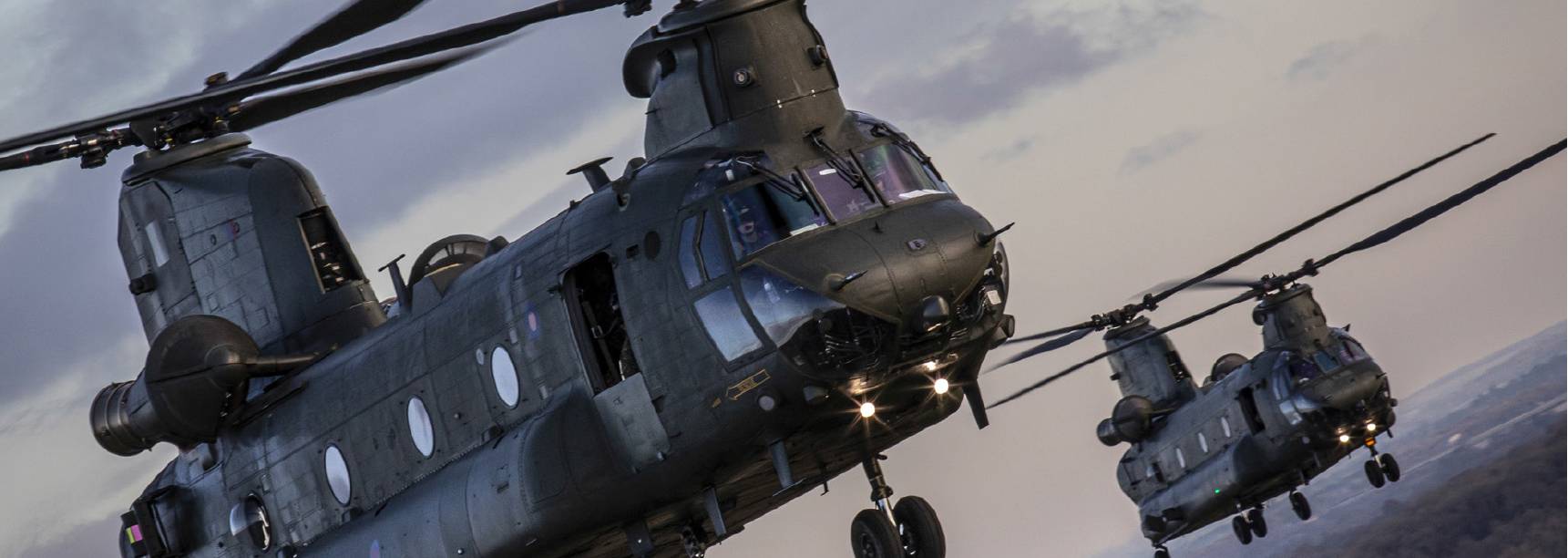 On 13 May, the RAF announced it would become the first international customer for the Block II Chinook helicopter, with a £1.4bn deal to acquire 14 of the longer range versions. Deliveries will start in 2026. MoD/Crown Copyright
Capability – Combat Air
There was much anticipation among commentators over the resolution of the debate around Lightning II numbers and the continuance of the Tempest programme. In the event, a rather bland statement on the former about growing the Lightning II fleet beyond the 48 aircraft already ordered rather left the question on the table. Given the November uplift of £16bn in MoD funding and lack of a subsequent announcement, it seems unlikely the previous through-life assumption of 138 aircraft will be realised by some margin. Also, it was something of a stretch to assert that the nature of the partnership on the F-35B endows a degree of operational independence to the extent that significant aspects, such as systems integration and manufacture of critical components, remain in the UK. The former only applies to weapons at best and the latter confers little noble work to the UK. While the operational value of the aircraft is a vital component of Carrier Strike, it does not offer a spiral development route to the key future technologies or methods that would place the UK at the forefront.
As for the UK’s Future Combat Air System (FCAS), confirmation of £2bn of funding for Team Tempest over the coming four years was welcome. The programme is a lifeline in preserving the UK’s indigenous end-to-end capability in fast-jet combat design, development and delivery. It also provides the laboratory in which novel sixth-generation technology and advanced manufacturing can be evaluated. Characteristics, such as an augmented reality cockpit and the ability to handle a city’s worth of data in a second plus the application of digital twinning and model-based engineering, have the potential to generate much unique intellectual property among the international, industrial and academic partners. It is also the platform around which to develop the systems of systems approach embracing swarming drones, loyal wingmen and directed energy weapons, all of which are appropriate to the battlespace envisaged in the IR.
Clearly, much has been learned about spiral development from the Typhoon programme, despite the constraints often inherent in collaborative programmes. Project Centurion, which was completed in mid-2019, provided the aircraft with Brimstone and Storm Shadow airto-surface weapons and the air-to-air Meteor beyond visual-range missile. Subsequently, a new mission data-handling system has been added. The DCP has now restated the importance of the electronically scanned Radar 2 programme and added SPEAR Cap 3 (in common with Lightning II) as a reprogrammable, longer-range alternative to Brimstone. In addition to the retirement of the early Tranche 1 Typhoons, the future organisation was confirmed at seven squadrons.
Capability – Rotary
Much of the success of Typhoon and Tempest (so far) has been the reliance on strategic partnering between the MoD and industry. This is also particularly true in the case of helicopters where Wildcat and Merlin production, capability sustainment and support programmes are exemplars of the approach in optimising both availability and through-life cost. However, the convergence between fixed-wing and rotary combat aircraft goes further.
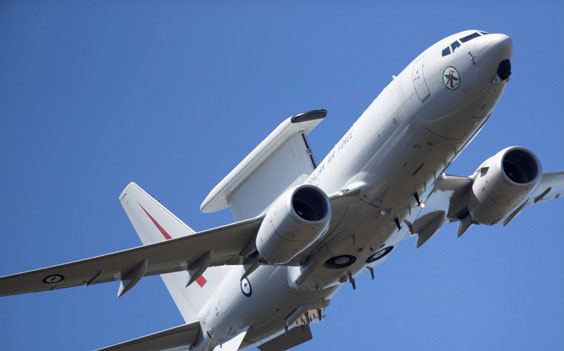 The IR revealed that the RAF’s E-7A Wedgetail AEW&C (seen here in RAAF service) buy had been cut from five to three aircraft. RAAF
The next-generation rotarywing platforms, both manned and unmanned, will need to enable high-end warfighting operations in contested battlespace. This requirement will see the need to integrate advanced technologies, including secure communications, GPS-denied navigation, integrated ISR sensors, data processing and dissemination, electronic warfare and threat detection systems, and precision weapons. These are all comparable to the features of the next-generation fixed-wing aircraft. The DCP is broadly silent on the nature of this challenge but does confirm investment in a new medium-lift helicopter in the mid-2020s as a Puma replacement. Given that the DSIS announced that competitive procurement is no longer the default strategy, the MoD would be wise to recognise the significance of the on-shore end-to-end design, develop and deliver capability within the UK’s strategic industrial base. Future helicopters will no longer be a commodity: rather, the technologies and industrial techniques involved call for the same approach as that applied to Tempest. As a result, there will be a need to take a strategic partnering approach with the UK’s only onshore helicopter OEM, Leonardo Helicopters in Yeovil. As such, this should also be adopted for the Puma replacement to allow the programme to help retain vital skills across the UK supply base, bridging the gap before the development of a next-generation platform commences.
Capability – ISR
Operations since the end of the Cold War and our assumptions about operations in the grey zone point to one conclusion: ISR capability will always be at a premium. However, budgetary constraints invariably apply. As the DCP points out, there are just nine P-8 maritime patrol aircraft in the programme, reflecting more the affordability following the cancellation of the Nimrod MRA4 than the true operational requirement. In addition, the initial E-7A AWACS order was for five aircraft and has been reduced to three with a two-year capability gap. Meanwhile, a proposed fleet of 20 Protector UAS has become 16. The DCP contains three implicit hints about additional considerations that might, together or separately, address some of these gaps. First, the development of an indigenous ISR satellite constellation is seen as a priority. Secondly, there could be autonomous anti-submarine warfare technologies waiting to be deployed and it is certainly the case that pervasive, full-spectrum ISR is at the top of the priority list in the 2020 Defence Science and Technology Strategy. Thirdly, technology has moved on from the case when only dedicated ISR assets were relevant.
Fast jet aircraft, such as Typhoon and Lightning II, contribute to the ISR mix, as do fully digital Wildcat and Merlin helicopters. Indeed, every sensor on a suitably equipped platform or even an individual soldier can contribute to the ISR picture. However, such capabilities are being held back by lack of data capacity and by poor imagery and video connectivity within and between the services. This shortfall presumably sits behind the priority listed in the Science and Technology Strategy. Concerns that the ISR ‘collect and disseminate’ requirements could adversely affect primary roles could be addressed by increasing levels of automation whereby ISR information (such as electromagnetic emissions) can be collected as a background task. Automatic dissemination to the wider force would follow after AI validation.
Industrial strategy
The DSIS makes several strides in changing the rather doctrinaire defence industrial strategies of the past. Of particular note is the recognition that the UK needs a sustainable defence industrial base for reasons of national security and to maximise the economic potential of what is admitted as ‘one of the most successful and innovative sectors of the British economy’. The replacement of ‘global competition by default with a more flexible and nuanced approach’ starts to lay the foundations of a true Team UK approach.
THE MOD WOULD BE WISE TO RECOGNISE THE SIGNIFICANCE OF THE ONSHORE ENDTO-END DESIGN, DEVELOP AND DELIVER CAPABILITY WITHIN THE UK’S STRATEGIC INDUSTRIAL BASE
Revisions of commercial terms and conditions in areas such as unlimited liability and IP management are welcome, as is the recognition of social value (and thus the positive impact on local GDP) as a factor in procurement decisions. Early and more systematic consideration of international collaboration is also a valuable step forward, as is the recognition of the importance of government-to-government agreements. It also replaces the 2021 Technology White Paper definitions of sovereignty around Operational Advantage and Freedom of Action with more pragmatic concepts of Strategic Imperatives and Operational Independence. Many in the industry will sigh with relief at the news that a review to simplify the Single Source Contract Regulations is in train. Finally, the strategy places considerable emphasis on a relationship with industry based on strategic partnering which aims to unlock mutual benefit to improve value to UK society and underpin long-term economic prosperity. Taken together, this is all very positive.
To make all this work successfully, the MoD will need to signal clearly its stability of intent to procure platforms and systems in sufficient volume to incentivise industry to invest their shareholders’ funds in bringing suitable products to market or developing and de-risking technologies for insertion into major development programmes. The key audience is both the domestic and the export market. Highly bespoke, gold-plated solutions do not readily fit this requirement. Also, in global terms, the UK has to compete for inward investment and measure up against the tax breaks that are on offer elsewhere. Finally, while positive, all this represents a significant culture change on both sides of the fence, a hurdle over which previous industrial strategies have stumbled. In addition, for the MoD there will be pressure to find the required number of suitably qualified and experienced individuals to operate at this interface at a time when such talent is nationally in short supply.
Setting the stage for exporting
Meeting the objectives of the Defence and Security Industrial Strategy, as well as delivering on the prosperity agenda, places a heavy premium on Team UK’s performance in the export market. As the previous industrial strategies have pointed out, the UK armed forces are held in high international esteem for their performance on operations and as discerning customers for their equipment and how it is supported.
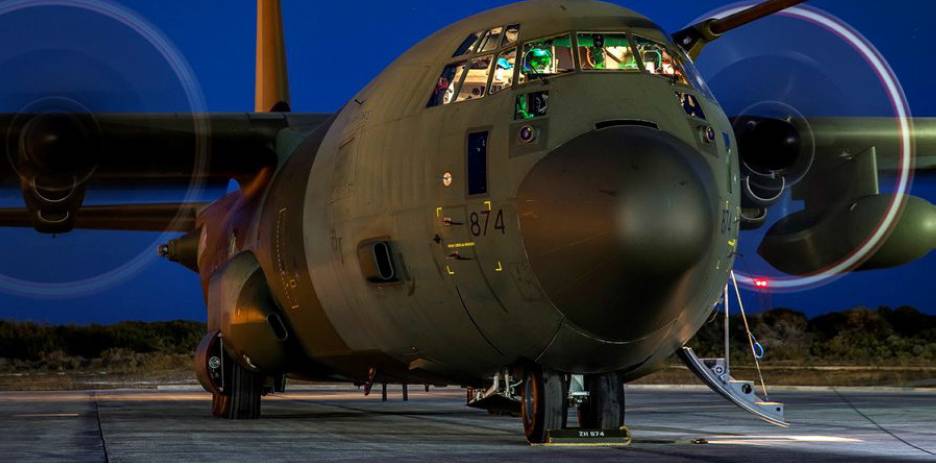 The IR also saw deep cuts to the RAF’s air transport fleet with the entire Lockheed Martin C-130J fleet of 14 aircraft to be retired in 2023. MoD/Crown Copyright
Defence exports represent more than just a transaction: rather they often represent the bedrock of strategic security relationships where the provision of UK training and doctrine is seen as a positive enhancement. The MoD’s new posture recognises this and cites the capacity required in the Military Flying Training System (MFTS). Exports also allow industry to retain critical skills and capabilities once production for the UK has finished. So, the development of standardised government-to-government commercial mechanisms is to be welcomed. These should also include services, including training, operational assistance and quality assurance but without adding to the unrealistic costs or unattractive terms and conditions.
There are additional complexities as technology moves up a gear. An approach of ‘international by design’ becomes problematic in an environment involving, say, AI and autonomy where there is not an internationally recognised approach to regulation or indeed to export. This challenge should be addressed now if the UK is not to be left behind in the competitive global marketplace which, in the case of defence, has implications beyond economics and potentially undermines the UK’s international influence.
Conclusions
In summary, this suite of defence policy and strategy documents represents a positive message about the UK taking defence and security seriously in the face of new threats and risks. As a suite of documents, they cover the ground admirably and are strengthened in their approach by the reality of a recent £16bn funding uplift. Finance has previously been the undoing of many a defence review. In geopolitical terms, while NATO is still cited as having primacy in alliance terms, there is a tilt towards deepening alliances in the Asia-Pacific region. This necessarily strengthens the UK’s maritime strategy which is firmly rooted in Carrier Strike with the attendant importance of its air power. It is notable that CSG21 which set sail at the beginning of May involving HMS Queen Elizabeth leading a task group will visit 40 countries, including Japan, India, Singapore and the Republic of Korea. Of note, the embarked related air power includes F-35Bs from 617 Sqn and the US Marine Corps’ VMFA-211, together with Wildcat and Merlin helicopters.
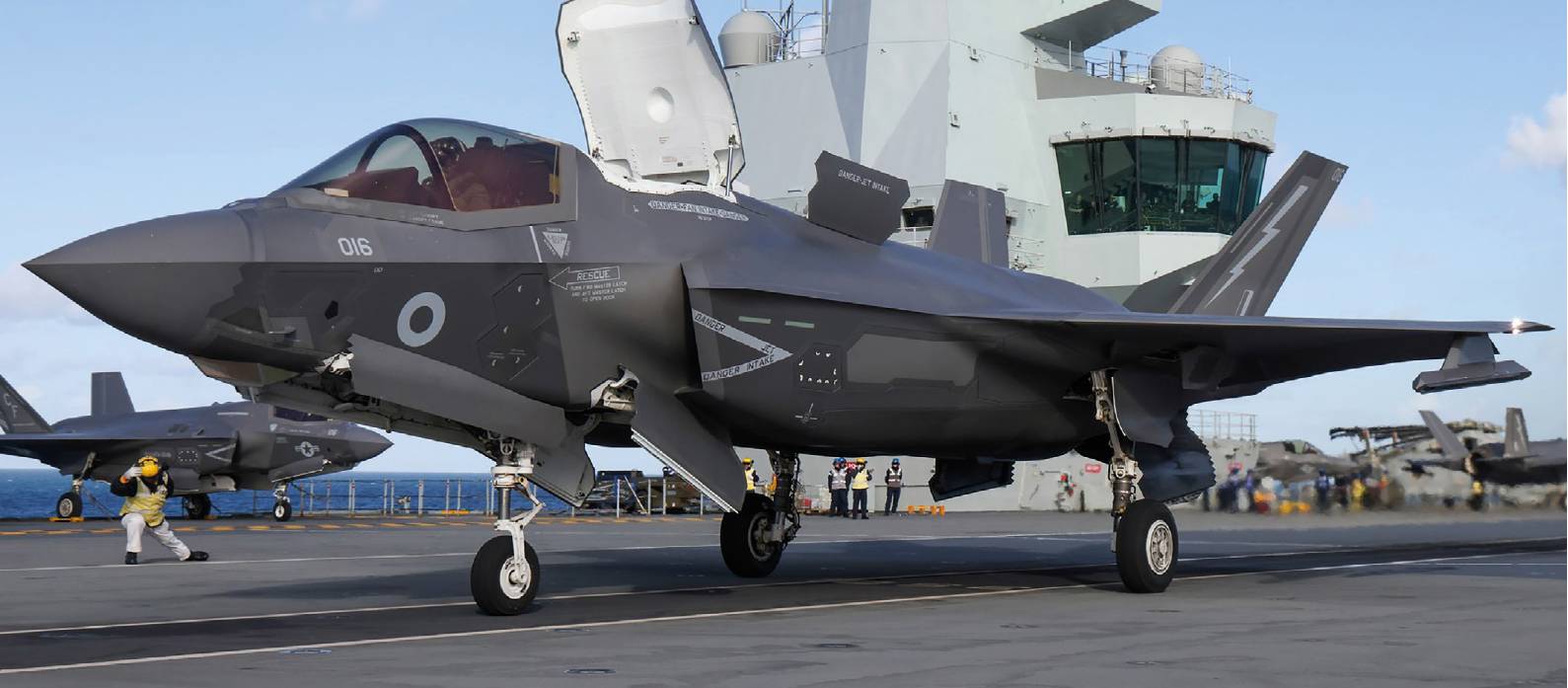 Global Britain – the HMS Queen Elizabeth-led CSG21 will tour Asia-Pacific with a mixed UK/US F-35 wing. MoD/Crown Copyright
From the perspective of the aerospace sector, the IR’s revised posture changes the sentiment of recognition that the UK defence industrial base is a strategic resource, and that the national S&T ecosystem is a fundamental element of success. The new emphasis on space is welcome but the related strategy is long overdue. Funding for Team Tempest is also a significant plus but our collective ISR capability is weakened by gaps which seemingly will be filled by space-based satellites in due course with other novel technology to follow. The importance of end-to-end industrial capability in fixed-wing is recognised but the same realisation about rotary wing is slow in coming. Overall, the industrial strategy certainly moves the dial in terms of easing the complexity of doing business with the MoD and the renewed focus on exports will be a significant help. The defence industry is now clearly seen as part of the solution to the prosperity agenda rather than part of the problem.
Placing this significant review in the context of the Society’s priorities of Climate Change and Sustainability, Future Flight and Spaceflight and Tomorrow’s Aviation and Aerospace Professional is also reassuring. In its climate change strategy, the MoD places significant emphasis on novel propulsion and synthetic fuels, areas of particular applicability to civil systems: the RAF has also joined the Jet Zero Council. Future Flight is well served by Team Tempest and the energy now being applied to the military use of space. Of tomorrow’s professionals, the combat air sector supports 18,000 jobs, with tens of thousands more in the wider supply chain, across the breadth of the UK including a significant cluster of employment in the North West of England. More broadly, there are 55,000 military and civilian engineers and technicians in defence, most of who will increasingly be confronted by the most advanced technology in all domains, much of which is at the cutting edge of science. Such an agenda will be a significant attraction to new entrants to the professions that we represent which is a comforting thought given that the ultimate outflow of talented and experienced people into industry represents a national resource of huge value.
Finally, it is fair to conclude that the IR and associated documents makes significant inroads in terms of the five capability challenges identified in the Science and Technology Strategy. However, in common with previous reviews, success will only come from government stability of intent, consistent, realistic funding and enough of the right people with the right skills in the right place.