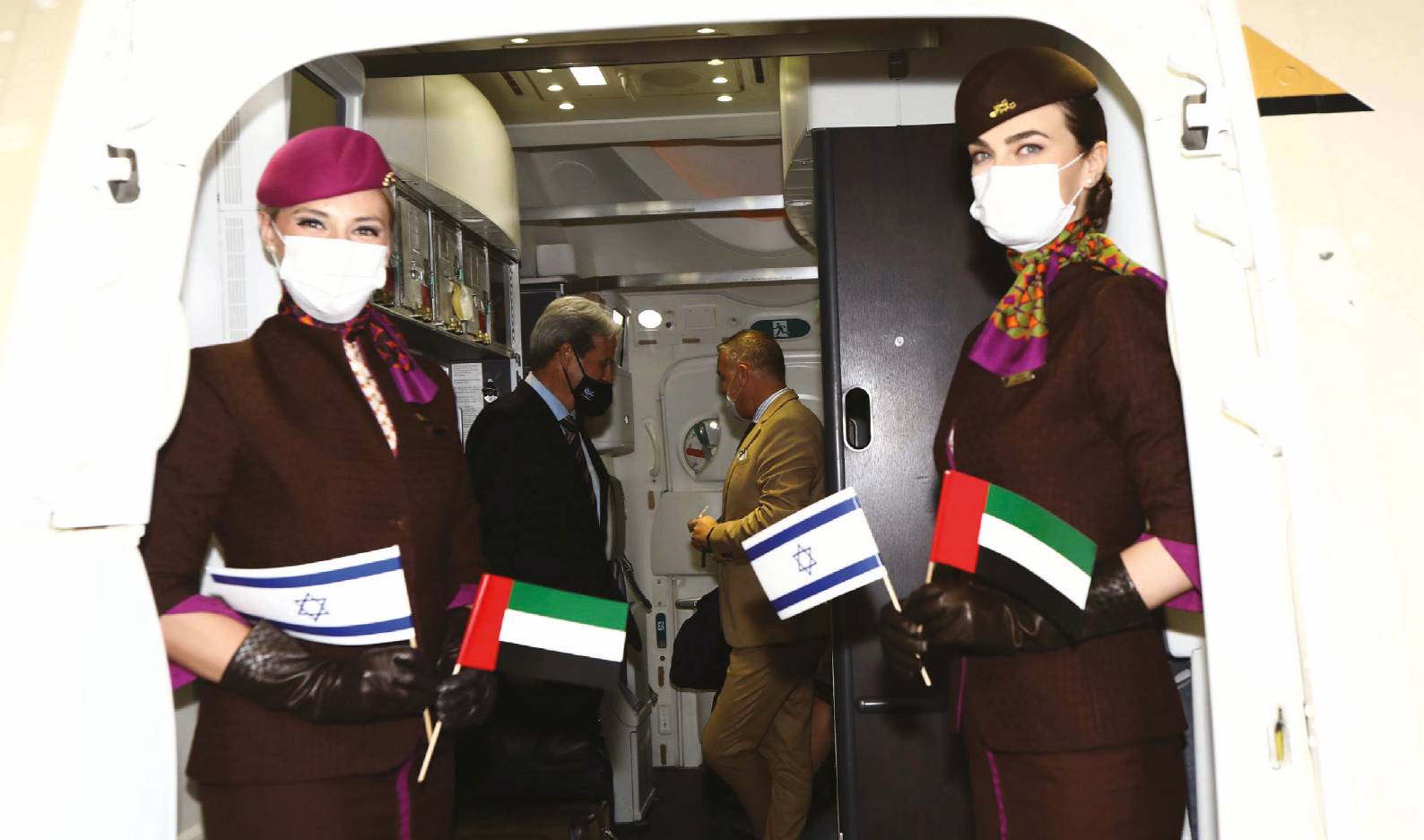
The last named airline’s inaugural flight to Tel Aviv was met by no less than Israeli Prime Minister, Benjamin Netanyahu, an indication of how significantly Israel regards the opening up of links with nearby Arab nations.
El Al and Bahrain’s national airline, Gulf Air, signed a wide-ranging MoU on future co-operation in early December, with Gulf Air planning to inaugurate a twice-weekly Bahrain–Tel Aviv service in early June.
All the airlines are hoping for traffic streams that will include leisure and business passengers; Israelis are inveterate travellers and are likely to be keen to sample both the Gulf’s tourist attractions and its well-known airlines. Many Arabs, for their part, may want to visit Islam’s third-holiest shrine, Jerusalem’s Al-Aqsa Mosque.
The exchange of diplomatic delegations between the previously opposed nations was followed by a rash of internet video clips of young Arabs and Israelis excitedly talking in apparent amity and expressing the wish to visit each others’ countries to learn more about their ways of life.
Israelis were quick to get in on the tourism act: El Al said it garnered more than 30,000 bookings for services to its new destinations in the first ten days of them going on sale, said the airline’s Acting Director, International Affairs, Stanley Morais. With Israel being such a small country, “So many people have not travelled. They’re looking to get out there and do things,” he said. This could mean Israelis descending, not only on well-known tourist destinations such as Dubai but also on the scuba attractions in Fujairah or the beaches of Ras Al Khaimah.
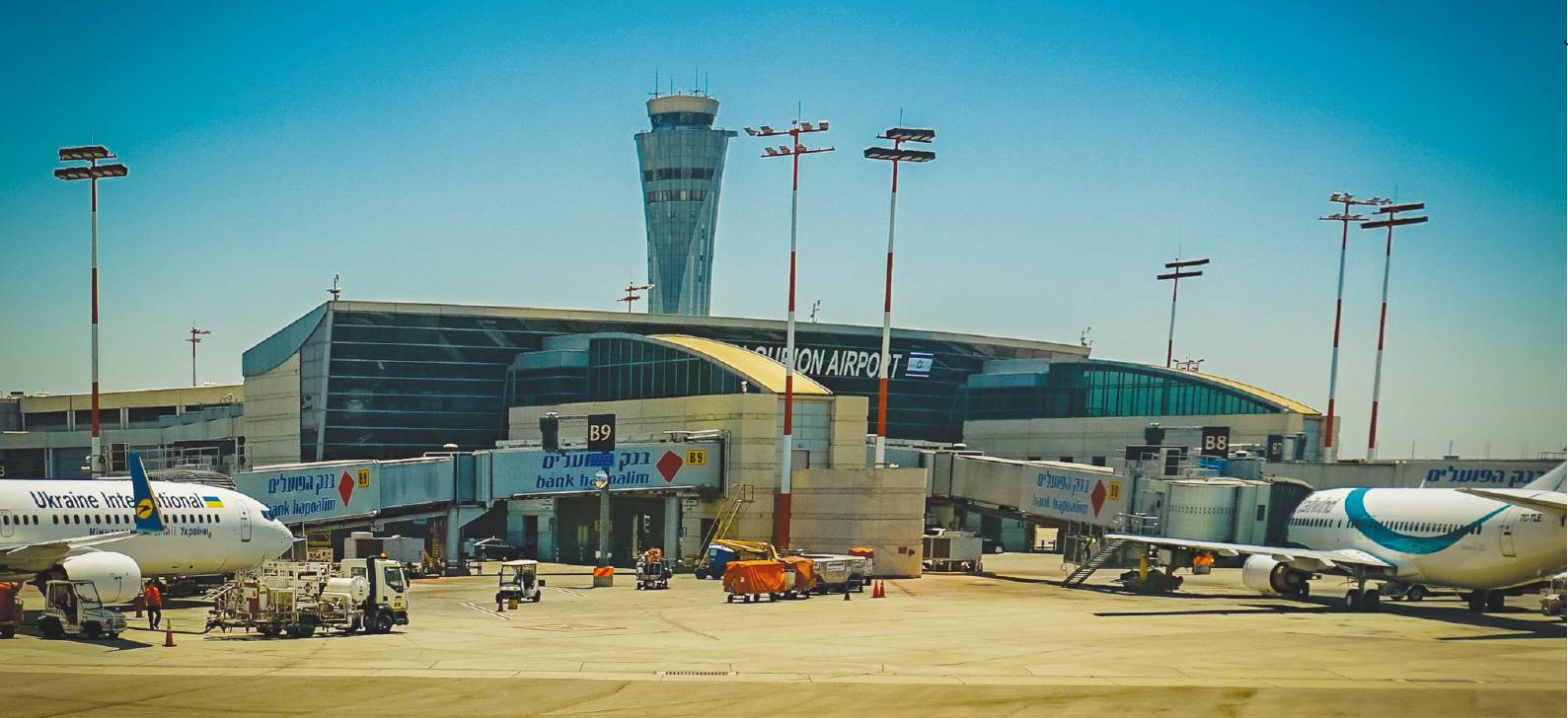 Ben Gurion Airport serving Tel Aviv. Ted Eytan/flickr
Travel broadening minds
Morais was hopeful that the start of air services would lead to the breaking down of barriers between the nations: “Once people get to meet other people and realise they are just like them, the old ways of thinking tend to disappear.”
Business travel is also showing early signs of growth. “Right now, there’s been a big upsurge in discussions about business,” he said. “There are lots of delegations going (between the two countries): banks and investment houses, hightech companies going back and forth.”
Gulf Arabs would soon discover that Tel Aviv was an ideal city for weekend breaks, he added. In addition to religious tourism from Muslims, large numbers of UAE-residing Christian expats from countries, such as the Philippines would also find that they were only some 3.5hr from the Holy Land.
This brings to the fore a critical issue. Before the easing of tensions between the countries, El Al had to fly around the Arabian Peninsula, when heading for its handful of Far East destinations in order to avoid Saudi Arabia. Skirting Saudi would have made the Tel Aviv–Dubai sector, for example, an economically unviable seven-hour flight. That all changed with the agreement of the Saudis to allow Israeli aircraft to transit its airspace, cutting journey times in half.
Bahrain, which operates a Flight Information Zone in the northern Gulf, has also said that Israeli flights can now use that airspace for future flights. Similarly, a new Israel-Jordan agreement over the use of each other’s airspace will also cut 15 to 20 minutes off the flight times of all airlines transiting the region, making a small but useful saving in fuel.
Morais said that his understanding was that the Israeli CAA had made it clear to its Arab counterparts when negotiating civil air agreements that the ability to overfly Saudi Arabia had to be an integral part of any deal.
This has potentially useful savings for the Israeli carrier, not only when flying to the Gulf, but further east too. It will lop two hours off the Tel Aviv–Mumbai route, for example and also allow the Israeli flag carrier to allot smaller, more economical Boeing 737s to the route, rather than the current 787s.
Indeed, Saudi Arabia, arguably the most powerful player in the Gulf – national airline Saudia is rapidly eclipsing Etihad as one of the ‘Middle East 3’ – remains the elephant in the room. It has remained largely silent on developments so far, a possible indicator of the wide range of opinion towards Israel in the country.
However, like other Gulf states, Saudi Arabia is rushing to diversify its economy away from hydrocarbons. A major plank of this diversification will be tourism and a swathe of huge tourist resorts, complete with several new airports, are planned, or are already under construction, on the Red Sea coast in the north-west of the Kingdom. Those new airports will be just an hour’s flying time from Tel Aviv – a possible factor in helping persuade the Saudis to follow in the footsteps of its neighbours and recognise Israel.
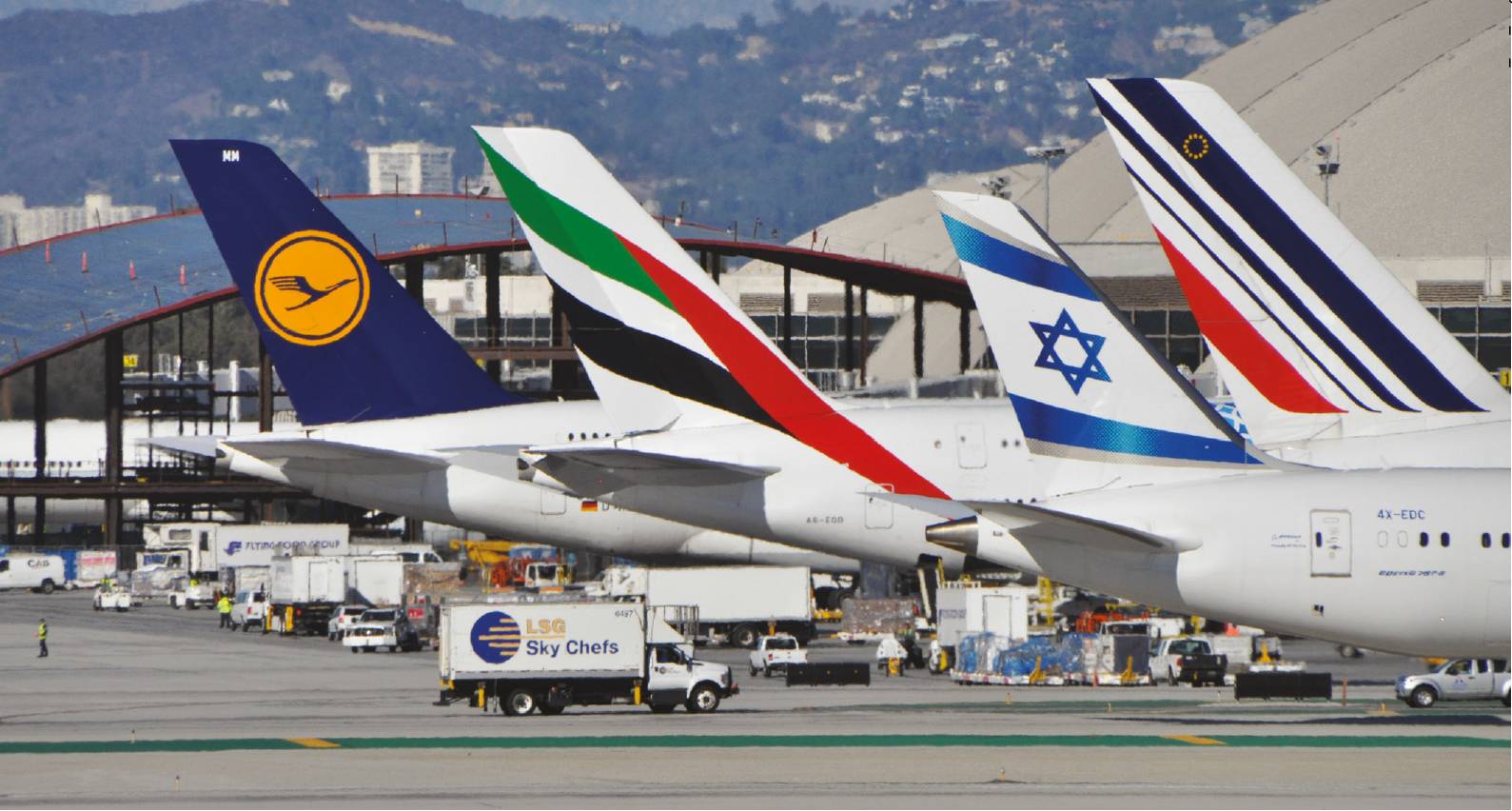 yuki_alm_misa/flickr
Sky traffic jams
Could the rush by multiple airlines to open new routes lead to overcapacity? While there will undoubtedly be an initial rush of passengers, that seems a distinct possibility.
The sheer number of airlines piling on to the Tel Aviv route could be problematical, believed Saj Ahmad, Chief Analyst of UK-based consultancy StrategicAero Research, who has close links with the Middle East. Morais was also cautious on this point but added: “We hope El Al, being the national carrier, will be able to pick up a reasonable proportion of the traffic.” It would be surprising if the airlines that have already declared their intentions were not joined by Emirates and particularly by Wizz Air Abu Dhabi, which has made no secret of its plans to make the UAE’s federal capital a major hub. Given the inefficiencies imposed on El Al because of the ban on it flying on the Jewish sabbath, it made sense for it to seek code-shares with Etihad and Gulf Air, Ahmad suggested. “They can’t compete head-to-head, so it makes sense to align themselves in a partnership,” he said of the match-up with Etihad.
El Al has already kicked off its involvement in the Gulf by announcing a weekly cargo flight between Tel Aviv and Dubai, operated by a wet-leased Boeing 747F freighter operated by US-based Atlas Air. The first such flight, on September 16, carried agricultural and high-tech equipment. However, what effect the current Israel/Gaza conflict will have on these fundamental shifts in air travel, airspace and defence, is as yet, unknown.
In defence of the Middle East
In the military field, the most immediate result of the new links between Israel and the UAE is likely to be a UAE order for Lockheed Martin’s F-35 fighter. The UAE has wanted to buy the advanced combat aircraft for some time but has been balked by the US policy of allowing Israel to keep a ‘qualitative military edge’ over the Arab world.
With that obstacle removed, an order was expected imminently. The Trump administration hoped to have the deal done before its term of office expired on 20 January, 2021. While this did not occur, in April it was confirmed that President Biden’s adminstration will continue with US plans to provide 40 of the stealthy Lockheed Martin aircraft to the desert nation.
“We ought to get them...The whole idea of a state of belligerency or war with Israel no longer exists,” the UAE’s Minister of State for Foreign Affairs, Anwar Gargash, was quoted by Al Jazeera news agency after an Israeli-US delegation made its startling 31 August visit to Abu Dhabi. “We feel that with the signing of this peace treaty in the coming weeks or months…that any hurdle towards this should no longer be there,” he added.
“The signals are that the F-35 will be released to the UAE in the near future,” Douglas Barrie, Senior Fellow for Military Aerospace at the UK’s International Institute of Strategic Studies, said. “This would fit in with the established US pattern of allowing Arab nations to buy US military hardware but only after Israel had ‘bedded in’ the same equipment first, such as Saudi Arabia’s purchase of the Boeing F-15 Eagle”.
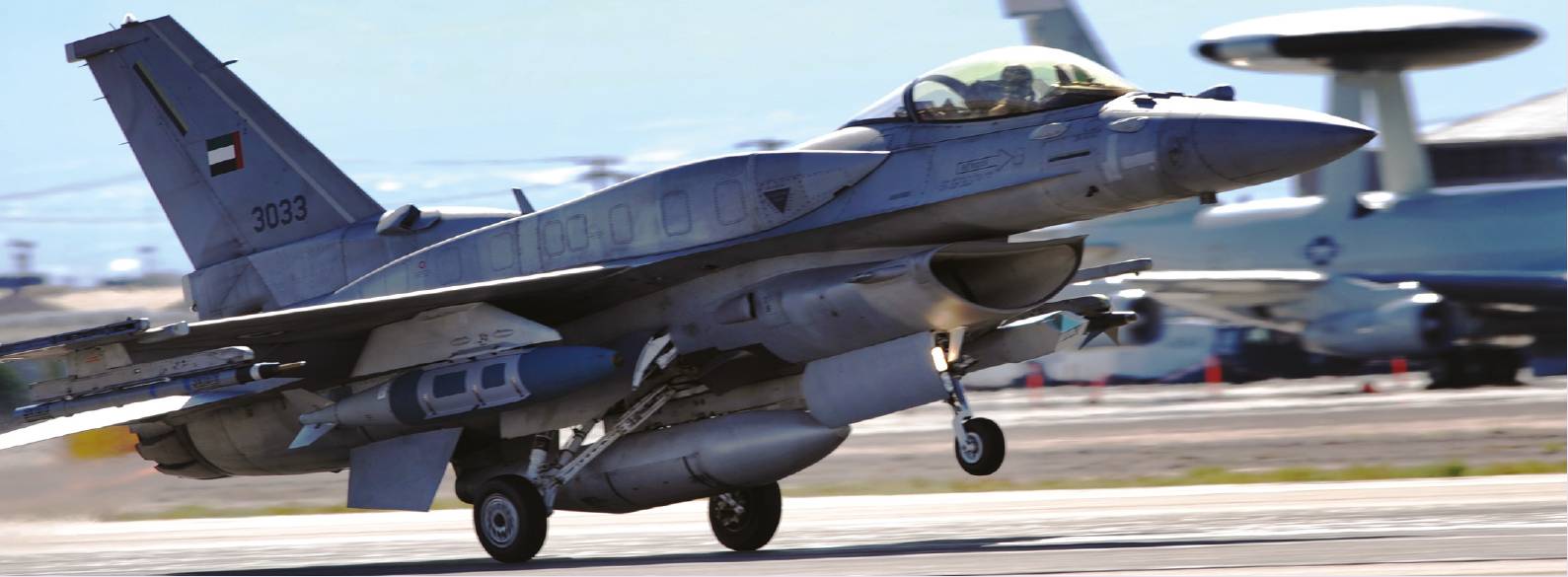 A United Arab Emirates (UAE) air force F-16E Fighting Falcon aircraft from Al Dhafra Air Base, UAE, takes off for a training mission.Michael R. Holzwort/USAF
He cautioned that nothing was certain until the aircraft were on the taxiway of a UAE air force base and that the incoming Biden administration would probably “run its finger over the deal”, especially given the opposition to it in certain quarters of the Democratic Party.
On balance, however, he felt it was likely the sale would go through. “The UAE has got a pretty advanced F-16 and its Mirage 2000s are going through an upgrade programme at the moment,” Barrie added. The question was whether the UAE would increase the number of types in its inventory, or whether an existing model would be replaced.
However, he anticipated that the greatest Israeli-UAE co-operation would be in the sharing of intelligence on areas of mutual concern, something that was unlikely to enter the public domain.
As with the civil aerospace side of the equation, the great unknown was Saudi Arabia’s future stance on better relations with Israel. Much will depend on the internal dynamics of Saudi Arabia. “There’s a multiplicity of views within the hierarchy as to how far they are willing to go,” said Barrie.
This quandary was summed up in reports in the Israeli media in late November that Prime Minister Benjamin Netanyahu had quietly flown to a Saudi airfield in the north-west of the Kingdom on board a private business jet to meet Saudi Arabia’s Crown Prince, Mohammed bin Salman bin Abdulaziz Al Saud. The reports were immediately and categorically denied by the Saudi government, an indication of how sensitive the subject of making peace with Israel remains in the Kingdom.
According to Israeli media reports, the crown prince – regarded as a reformer, although one whose reputation has been tarnished following the murder of dissident Jamal Khashoggi in the Saudi’s Istanbul consulate – is in favour of making peace but his father, 85-year-old King Salman, has said he will not countenance this during his reign. It is a mark of the swirling mists that surround Saudi power structures that this all remains speculation.
However, there have long been indications of a discreet ‘back-channel’ of intelligence information flowing between Israel and the Kingdom on areas of mutual concern – for which, read Iran.
In addition, it is widely believed that Saudi Arabia has quietly made it known that, in the event of Israel reaching the point that it feels it must launch air attacks against Iran, before Tehran has a viable nuclear weapon, the Kingdom would not impede Israeli combat aircraft overflying its territory to and from their targets. Such permission – whether given openly or not – would considerably simplify the logistics of such a raid.