AEROSPACE Climate change conference report
Easy does it for greener skies
Dr JOHN GREEN FRAeS reports from the RAeS ‘Mitigating the climate impact of non-CO2 – Aviation’s low-hanging fruit’ virtual conference in March 2021.
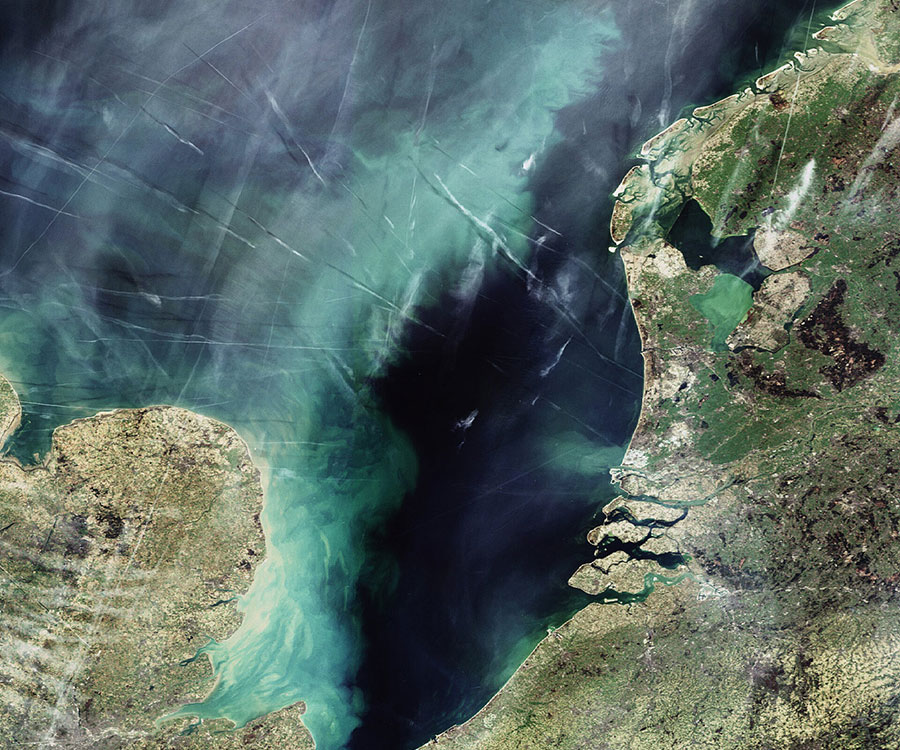 ESA
ESA
On 23-24 March 2021 the Royal Aeronautical Society hosted a joint conference shared between its Greener by Design (GbD) group and the Institute of Atmospheric Physics of DLR, the German Aerospace Centre at Oberpfaffenhofen. The event was organised by the Contrail Avoidance Group (CAG), an informal body formed after the GbD conference in 2015 by members of Greener by Design with members from DLR, NATS and UK universities. The rationale for the conference was that within the scientific community there was now fairly solid agreement that the non-CO2 effects of aviation are responsible for two-thirds of its impact on climate. The strongest impact is from contrails and contrail cirrus, with the impact of NOX X emissions at altitude also contributing. For both these impacts, the prospects of substantial reductions are real and potentially realisable within a far shorter timescale than the options for reducing CO2 emissions – hence the ‘low hanging fruit’ in the title of the conference.
The conference was a virtual, online event divided between two afternoons. The presentations were grouped under the headings ‘The Science Base’ on the first day and ‘Mitigation Possibilities’ on the second.
The meeting opened with a keynote address by Robert Sausen, Head of the Institute of Atmospheric Physics at DLR. The talk, entitled ‘Climate impact of aviation’s non-CO2 emissions – An overview’, covered all aspects of aviation’s climate impact but then focused on the non-CO2 impacts and the options for mitigating them.
For CO2 emissions, he showed that, even with carbon-neutral growth after 2020 as projected by ICAO, the impact of aviation’s CO2 on temperature will continue to grow for the rest of the century. By 2100 the projected temperature increase will be more than three times the increase in 2020. There is quite a spread in the projections to 2100, depending on the assumed Intergovernmental Panel On Climate Change (IPCC) RCP (representative concentration pathway), but the importance of CO2 emissions from aviation is starkly clear.
The next two presentations addressed different aspects of the climate impact of NOX X. This is the mixture of NO and NO2 that is produced in the high pressure and temperature conditions in an engine combustion chamber by the combination of atmospheric nitrogen and oxygen. They are not greenhouse gases but at altitude enter into complex chemical reactions that result in an increase in ozone concentration and a reduction in methane concentration, both strong greenhouse gases.
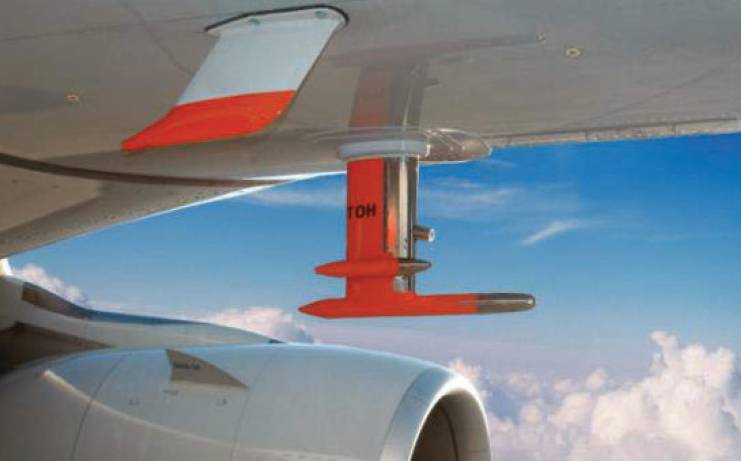 Data has been collected using a handful of instrumented airliners flying normal operations under the In-service Aircraft for a Global Observing System (IAGOS) initiative. IAGOS IAGOS
Agnieska Skowron of Manchester Metropolitan University discussed the effect of future atmospheric background composition on NOX X climate impact in the longer term. Emissions from aircraft and from sources on the ground both influence the background level of NOX X at cruise altitude, the emissions from aircraft having about twice the effect of those on the ground. The NOX X emissions at ground level are expected to reduce by 2050 leading to a cleaner upper atmosphere, which will reduce the climate impact of NOX X. However, this will be offset if NOX X emissions in cruise continue to increase.