AIR TRANSPORT Vaccine logistics
Getting the vaccine out – from 747 to drone
With the world’s airfreight companies and logistics experts now mobilising to deliver the Covid vaccine worldwide – the race is on to inoculate the world. MARTYN CARTLEDGE takes a look at just what the reality might entail.
|
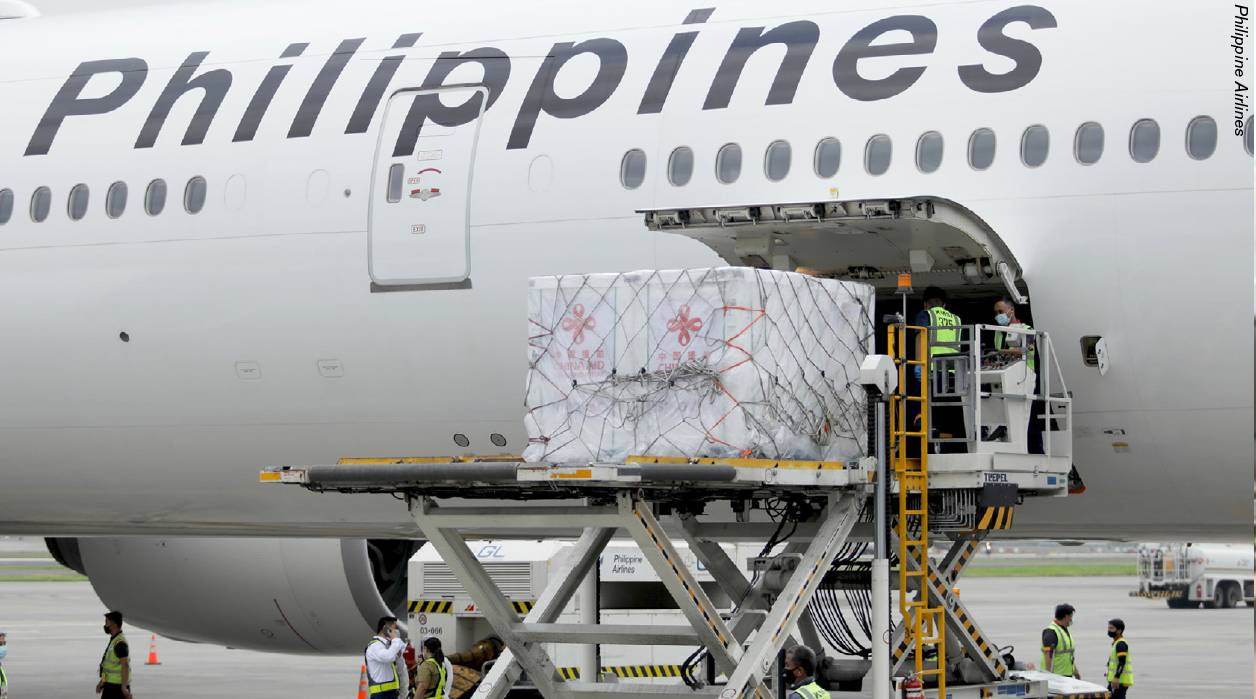 Philippine Airlines Philippine Airlines
|
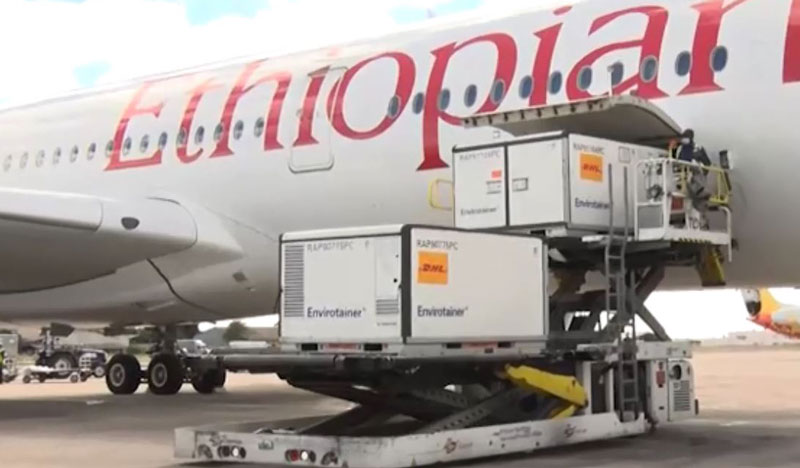 Airbus Airbus
|
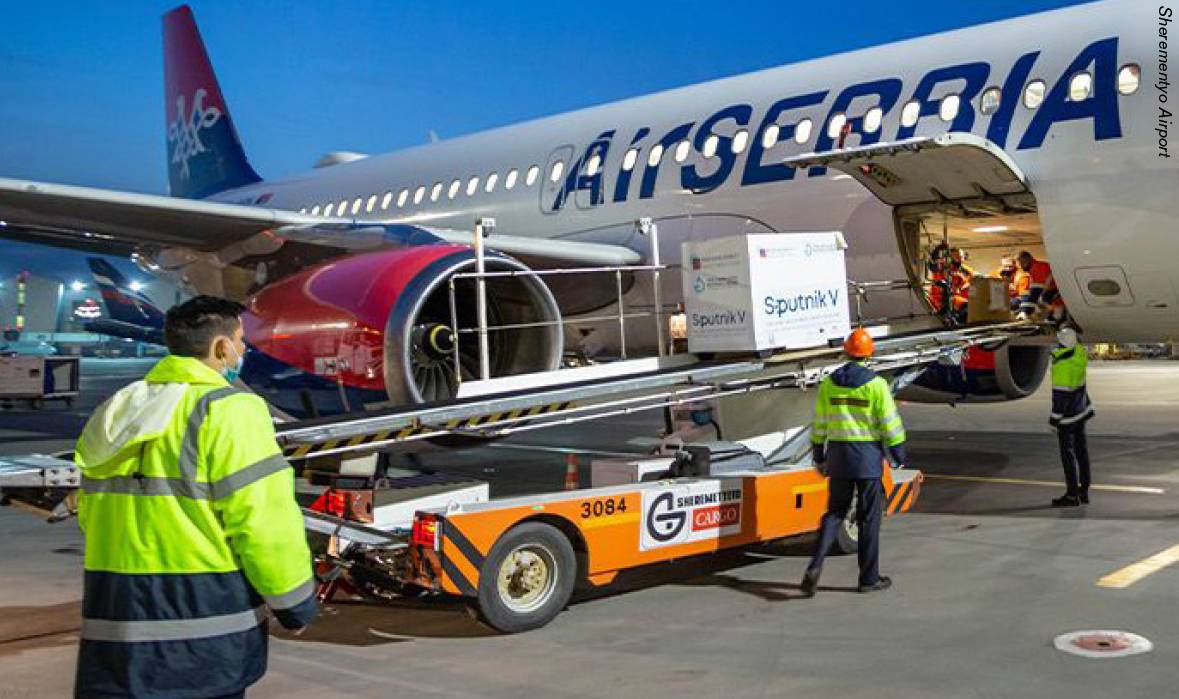 Sherementyo Airport Sherementyo Airport
|
Science was always going to be the way out of the pandemic, however long that might take. The main part of this strategy is for the world’s population to be vaccinated. However, even taking into account those that might, for whatever reason, refuse the vaccine, this is a massive undertaking with around 7.8bn recipients. Early on in the pandemic IATA was reported to have stated that it would need 8,000 747 freighters to transport just one dose for everybody.
The job ahead is absolutely enormous in what is, in normal times, already a complicated process. There are various clocks ticking: there is a product expiration date, multiple modes of transportation and multiple handoffs with differing transportation methods in units with differing lifespans of refrigeration. Even the vaccines themselves have massively different storage requirements, and some at temperatures not normally needing to be reached.
Of course, aviation will not be transporting every dose, with vaccines being manufactured around the world and land transport taking some of the load. Even then, somewhere like the Outer Hebrides or a small village in a remote and inhospitable area with no obvious land route would not require a 747 full of the vaccine. This then creates a massive logistical nightmare both in calculation and physical terms, made even worse by the massive loss of operational passenger flights with their corresponding belly hold capacity. Furthermore, the comparably small number of dedicated freight aircraft are being increasingly used with the massive increase in B2C goods, as the world’s customers’ shopping habits head increasingly more online.
Problems ahead
So, just how will aviation play a part in delivering such a valuable and time-sensitive product? There are a number of challenges to be overcome:
- The aforementioned capacity issues
- Storage and transportation of pharmaceuticals require refrigeration with some vaccines outside of the norm, such as Pfizer-BioNTech at –70ºC
- This stretches even further when you look at the cold chain as a whole. Laboratory manufacture – truck – airport – aircraft – truck – destination
- A specific issue for aviation is the use of dry ice which is frozen carbon dioxide. This substance sublimates at –78.5ºC, filling any enclosed space with potentially harmful CO2 gas.
- How to get this time and temperature-sensitive product to difficult or inhospitable destinations.
Capacity issues
Half of the world’s cargo, pre-pandemic, was carried in the holds of passenger flights on mainly widebodied services. These services are still only showing a limited return and varying from area to area. Add in the spikes in infection rates stalling, this return means that this is not really a viable method on its own and probably a catch 22 situation with passengers not travelling until the impact of the disease is lessened.
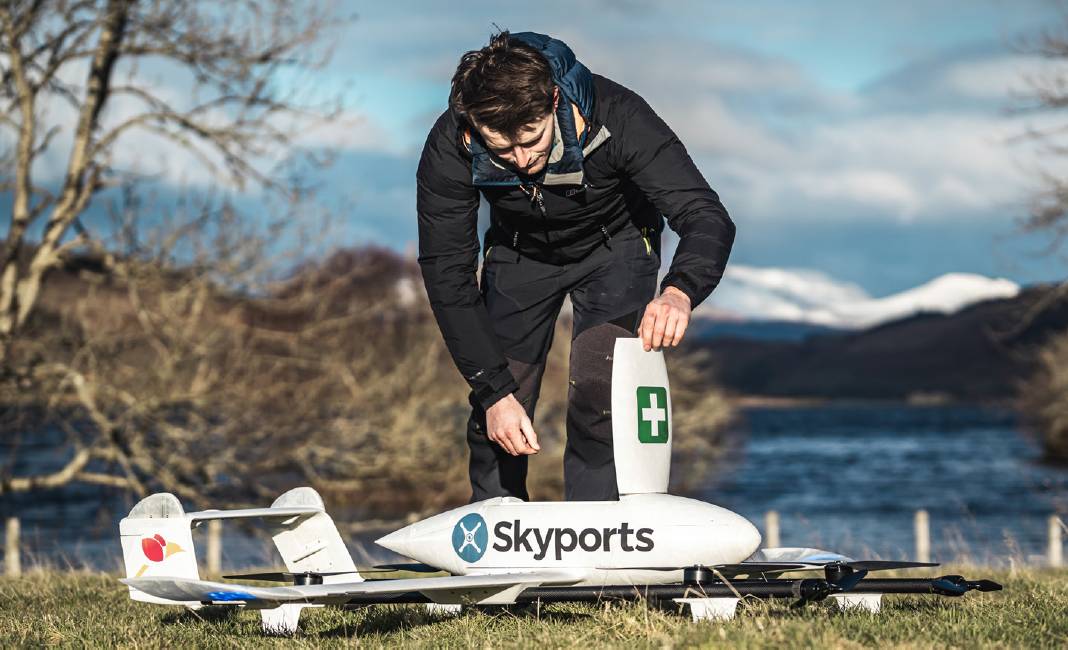 Skyports
Airlines are bringing back some of their grounded aircraft to act as what has been termed ‘preighters’, in other words passenger aircraft converted into freighters, some simply utilising belly hold but others having had the cabin modified to initially take products that have less stringent transportation requirements, such as PPE.
The giants of cargo transportation, such as UPS, DHL FedEx etc, have seen massive increases in demand over the last 12 months as the world’s consumers increasingly buy their goods online, so spare capacity with these companies is reduced. This can be seen in the throughputs of cargo airports. For example, East Midlands in the UK has seen month-on-month rises of up to 32% with Brussels seeing a rise of over 20% year-on-year to January and full freighter demand up by an incredible 72.5%. That said, these and many other, dedicated freight carriers will have a major role to play and, because of their networks are able to help with one of the other issues, that of the ‘cold chain’. For example, the big three have made massive investments in ‘Freezer Farms’ capable of reaching temperatures sufficient to store the likes of the Pfizer and Moderna vaccines which have the greater storage requirements.
Also, the companies’ ground fleets will play their part in transporting the shipments from the airport to whatever hubs or distribution centres have been enabled in each country.
A long road ahead
The task has only really just begun, despite the fact that, as of mid-April 2021, around 400m people had received at least one dose. This amounts to a tiny percentage of the world’s population and the majority of these people are in the wealthiest countries with good medical and transport infrastructures. As more vaccines become available and, hopefully, with that an increased supply, the task will only get bigger and potentially more difficult. It is going to require the combined efforts of the world’s airlines and logistic companies to succeed in this monumental task, while looking at the world as a single unit.
Emirates is an example of this. With no specific solution to transport the vaccine from Mumbai to Ghana, Unicef contacted the airline and, within 15 minutes of the request, a Shanghai-Dubai flight was diverted as a technical stop, exclusively to pick up the very first Covid-19 vaccine shipment under the Covid-19 Vaccines Global Access (COVAX) facility. This was later delivered to Ghana once consolidated with PPE and syringes – great PR obviously and an example of the sort of effort that is required.
Furthermore, Emirates Skycargo division, alongside Dubai Airports, DP World and IHC–UAE have created an alliance to support the COVAX initiative to equitably distribute 2bn doses of Covid vaccine in 2021 to support this much needed increase. This will utilise Emirates SkyCargo’s extensive cold chain facilities, including the recently activated world’s largest airside hub dedicated to the storage and global distribution of Covid-19 vaccines at Dubai South. The airline has said that: “With our modern widebody aircraft fleet, our network reaching more than 135 cities across six continents, including major pharma hubs and our expertise in handling pharmaceutical shipments, we are well placed to work with our partners in the Dubai Vaccine Logistics Alliance in order to make sure that the Covid-19 vaccines are reaching every corner of the globe, especially cities in emerging markets.”
Dubai Airports has earmarked additional space at dedicated facilities at DXB. The repurposed cargo facilities will act as storage for Covid-19 vaccines that will be transported through its interlinked operations at DXB and DWC. Neighbouring Abu Dhabi launched the Hope Consortium to handle the logistics for over 6bn doses of the vaccines manufactured around the world – whether in single or multi doses – in cold and ultra-cold conditions in 2021.
In Europe, Brussels has become a hub for vaccine distribution to over 40 destinations. DHL has carried out daily shipments with the likes of Singapore Airlines, Virgin Atlantic, United and El Al also carrying out flights. If the latter comes as a surprise, perhaps it should not, as Israel has, by far, the largest percentage of its population inoculated.
Arnaud Feist, CEO of Brussels National commented on the involvement of the airport: “With our logistics partners, we have invested a lot in the preparation of this essential transport and we can therefore offer a streamlined chain to get the vaccine to its destination in optimal conditions”.
Military called up
Meanwhile, the world’s airforces have often been a lifeline to more remote populations. The UK with its 14 overseas territories has possibly a unique role to undertake, given their often remote positions in the world. St Helena being a good example of this, as one unnamed Foreign, Commonwealth & Development Office spokesperson put it: “St Helena is so remote we sent Napoleon to die there!”
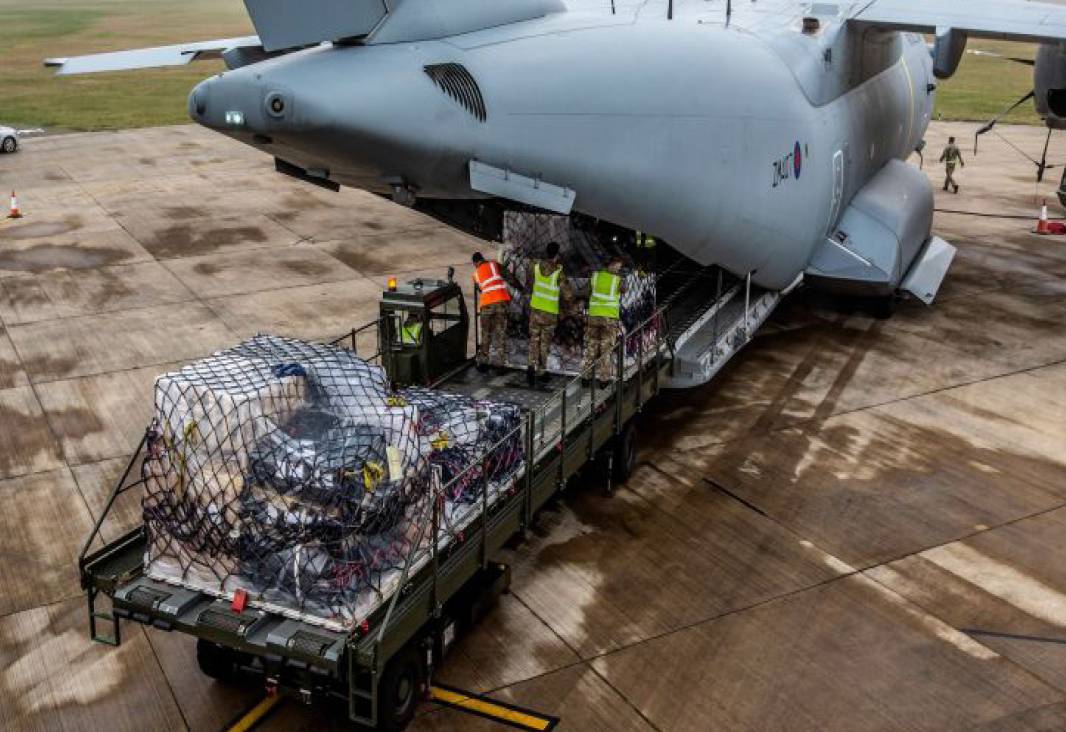 The RAF deliver medical supplies. MoD/Crown copyright
The RAF has flown vaccines to many of the Crown Dependencies, such as Ascension Island and Gibraltar, as part of Operation Broadshare, the UK Armed Forces’ response to the Covid-19 pandemic overseas with aircraft, such as the A400M and C-17 tasked with differing roles, including vaccine delivery. Following the Gibraltar delivery, where now over 90% of the population is vaccinated, James Heappey MP, Minister for the Armed Forces, had this to say: “The UK Armed Forces have stepped up to support British nationals, wherever they are, since the very start of the Covid-19 pandemic. Following the RAF’s delivery of thousands of vaccines, the airmen and women, sailors and soldiers of British Forces Gibraltar are working together to get the life-saving jab into British arms as quickly as possible.”
In India the Air Force will also use its exclusive military airfields and advanced landing grounds to transport the vaccine to the remotest parts of the country utilising C130Js and An-32s. It is highly likely that these will not be the only use of the world’s military capabilities as vaccine rollout gains traction.
Challenging storage
Regarding these optimal conditions, just how are the vaccines kept so during flight and indeed any ground transportation before and after?
The storage containers come in broadly two types: active and passive. Active, like the Envirotainer, are powered systems which, in general, are quite large and designed for flight in cargo jets as unit load devices (ULDs). These will actively maintain temperature throughout the time that they have power and are nearly always reusable. Passive are unpowered and consist of an insulated container with dry ice or some form of phase change material to maintain the temperature. These items come in a variety of sizes from what are termed ‘Parcel Products’ to much larger units with sizes varying from 2–3,000 litres.
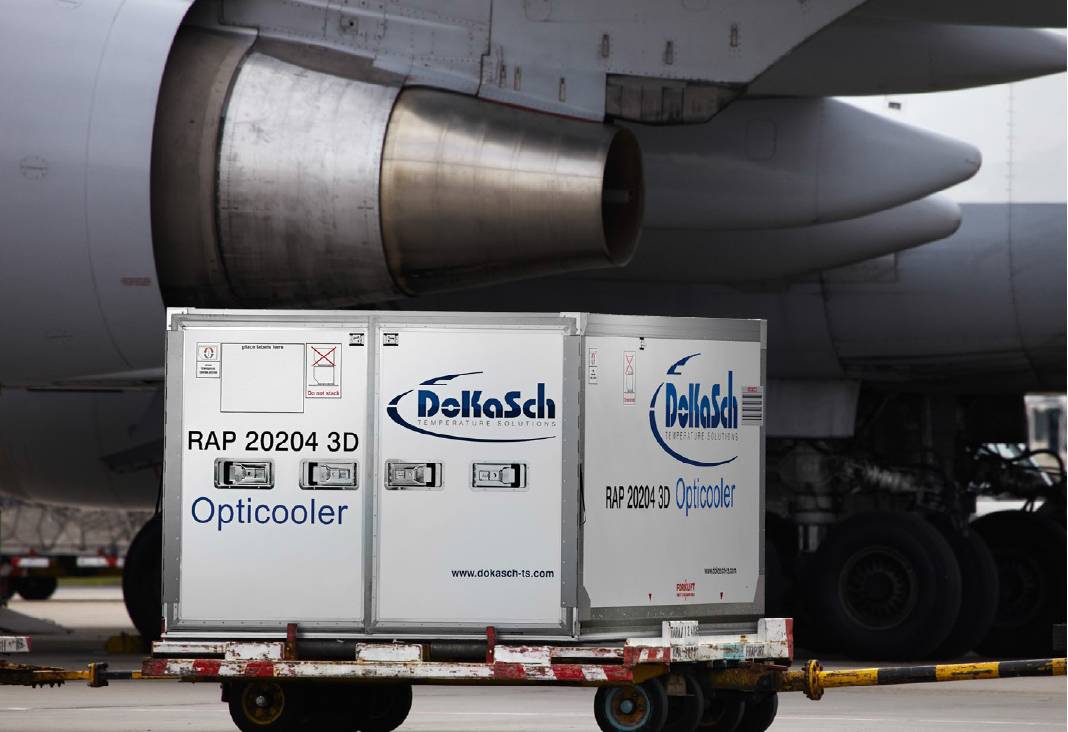 Insulated air containers are used to transport medicines and life science products. Delta Air Lines
They comprise an outer box (corrugate/ correx), and insulated inner box or an insulated inner box with additional vacuum insulation panels. Coolants are either dry ice (usually for shipments of -60ºC and below), PCM (phase change material) 2ºC to 8ºC (known as chilled), 15ºC to 25ºC (ambient) or frozen, which is usually –20ºC or –50ºC. In addition, water/gel packs are also used for shorter, less challenging durations and temperature profiles. Although these are affected by ambient temperatures, they will, on average, hold temperature for around four days. These parcelsized units are therefore quite easy to transport in correctly modified ‘preighters’.
Some containers utilising dry ice are considered active by some manufacturers as there is a coolant but generally this is not controllable and will be affected by ambient temperatures. These passive units are often single use and, even when not, are quite often disposed of by the end user anyway.
This expected increased use of dry ice, considered a dangerous good for air transport as it sublimates to CO2 2, is another challenge. It can potentially incapacitate flight crews as, concentrations of around 5% of gaseous CO2 2 in breathable air can lead to an excessive concentration of CO2 2 in the blood while concentrations upward of 10% may cause convulsions, coma and death. The normal upper limit in a passenger cabin is <0.5%.
In turn this has led to some concerns being noted with EASA publishing guidance for its use at the end of last year with its Executive Director Patrick Ky having this to say: “This guidance makes an important contribution to the global vaccination effort by defining the conditions that must be met and the precautions to take when transporting larger quantities of dry ice on an aircraft, whether in the cargo hold or potentially also in passenger cabins. Due to its speed and ability to reach relatively remote geographical areas, air transport is an essential component in the rollout of Covid-19 vaccines.”
The bulk part of the transportation process is, therefore, likely to be a logistical challenge met by a variety of means by operators and worldwide alliances. However, the product still has to be delivered to its final destination.
The ‘Last Mile’ delivery
Ground transportation will undoubtedly take a large proportion of the vaccines from airports through distribution centres to the actual vaccination centres. However, as mentioned, not everywhere is easily accessible by ground transportation. In an article in the Financial Times last year it was suggested that ‘two-thirds of the world are unlikely to have easy access to vaccines requiring frozen storage’, creating a never-before-seen logistical challenge. Although the transportation of the product by air is likely to be part of the solution, this creates its own set of challenges to overcome.
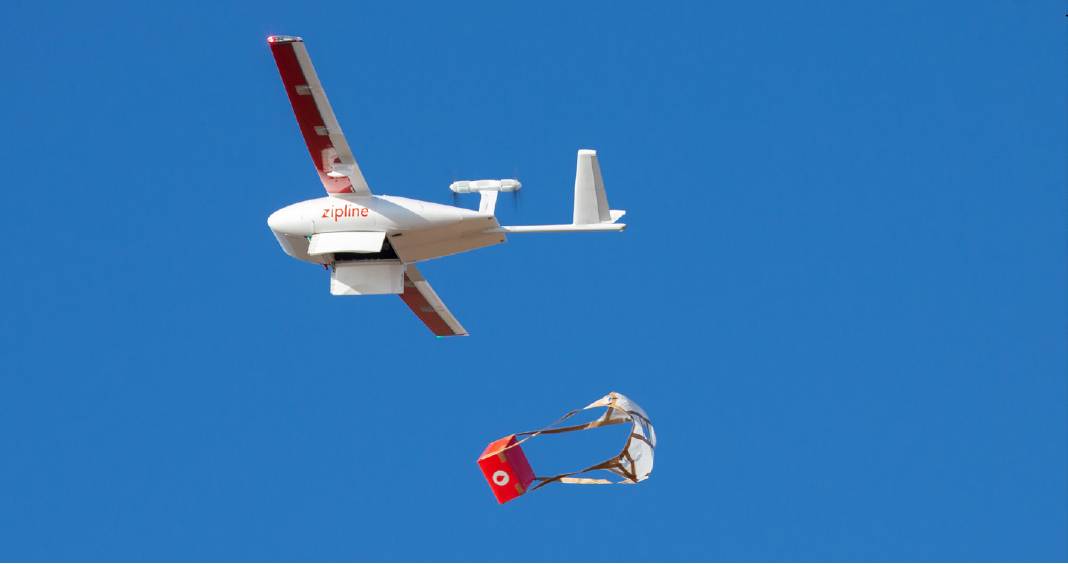 Zipline is the world’s largest medical drone delivery network. Zipline Firstly and most prominently discussed, is how to keep the product at the correct temperature throughout the whole journey. The aforementioned active storage units are less likely to be used on the final mile of the journey, mainly because the volume of product they can carry, would generally be more than one centre could use. Therefore, a greater use of the passive type of unit in its varying sizes will be the unit of choice in whichever device they make the final section of their journey.
Whereas the larger airlines will have a major role in getting the bulk product from manufacturing centre countries to major airports around the world, not everywhere has an airport with the capability to handle a large cargo jet. Smaller aircraft can, of course, take the passive units but at what cost?
The ratio of product to packaging is very small, so the cost per vial probably quite high. There are exceptions though. Italian firm Tecnam has modified one of its aircraft, the P2012 Travelcare, to make it into a –85ºC freezer that is capable of transporting 115,000 vaccine doses. With the aircraft’s ability to land on unpaved, dirt, gravel or grass runways as short as 1,850ft (565m), it appears to be a major weapon in the challenge of this last mile. The company states that this is all done at an average cost of €0.005 per vial per flight hour.
The refrigeration unit used is made by Desmon, an Italian company making refrigeration equipment mainly for the food services industry but also producing its Ultra Freezer range which it claims keeps the temperature stable for up to 40hr without power and, like the others mentioned, are reusable.
Drones, or to be more precise unmanned aerial vehicles (UAVs), are a real possibility. These are already being tested by Amazon and UPS with the plan of using them for their ‘normal’ deliveries of up to 15 miles with a payload of under 5lb. In an uncanny little twist Neolix is also trialling drone deliveries in Wuhan, China.
Delivery of the vaccine to the Isles of Scilly in the UK was actually made by Skybus, the operator of air services to the islands. However, before that on 10 December 2020, the airline’s operating company, the Isles of Scilly Steamship Company, teamed up with Flylogix to operate the first ever commercial drone flight between two UK commercial airports aimed at being the first scheduled freight delivery service by drone. The most interesting part of that flight with regard to the vaccine is that the outgoing service carried an NHS supply box.
At the other end of the country, UK-based Skyports is using its drones to carry Covid-19 samples and test kits in some parts of Argyll and Bute – in what has been described as a UK first. This is planned to become both an ‘on demand’ service, as well as a scheduled service and, furthermore, there are already plans being considered to deliver medicines in this way. This reduces the transport times in some areas from 36 hours by road and ferry to a mere 15 minutes in the air.
In Malawi in Africa, this has been taken a step further with the government teaming up with Unicef to test drones for use in supplying medicines along what has been described as a humanitarian drone testing corridor.
However, an even greater step has been taken in Ghana, the first country outside India to receive Covid-19 vaccine doses shipped via the COVAX facility – the mechanism to ensure that people in all corners of the world will get access to Covid-19 vaccines, regardless of their wealth.
Here, Zipline, a company based in California and supported by the Gavi vaccine alliance, among others, has, in conjunction with UPS which have provided the ground transportation element, partnered with the government of Ghana to help deliver 2.5m doses of the vaccine to many parts of the country. Given the often difficult terrain, the Zipline drones are operated from specific sites called ‘nests’ where they can take off and land but the delivery of the vaccines to vaccination centres is by parachute into a drop zone of around three metres in diameter. “Being able to use every point of care in the health system to get people vaccinated – that’s the strategy here,” explained Zipline’s Caitlin Burton in a recent interview with VaccinesWork. “We’ll be sending exactly the number of doses needed – the chain of custody is very short and the cold chain is one hundred percent guaranteed.”
This point regarding the cold chain is one of the cornerstones of the company process, stating that it can safely deliver even the Pfizer vaccines without countries having to invest in significant new cold chain storage facilities – even if, of course, these facilities are available given the massive, almost frenzied, demand for freezers and dry ice generated by the storage requirements of the vaccines.
Dr Seth Berkley, CEO of Gavi, reiterated this point: “With every dose [of Covid-19 vaccine] being so important, it is critical to ensure that our partner countries have the necessary support and tools to deliver vaccines effectively and efficiently to those who need them.”
Zipline is also working within Nigeria, Rwanda and in the US. It does seem clear that this method of aerial delivery by drones has great possibilities. The issues that have been raised about the increased use and amounts of dry ice on board airliners will, of course, not be an issue here. Given that there is no pilot to potentially incapacitate, the product can be kept at the temperature required despite the often high ambient temperatures and at a cost that is also attractive. The use of drones for the ‘final mile’ of vaccine delivery is thus set to be an increasingly attractive proposition once one of those 8,000 747s has made the initial journey.