Message from RAeS
Message from RAeS
OUR PRESIDENT
Prof Jonathan Cooper
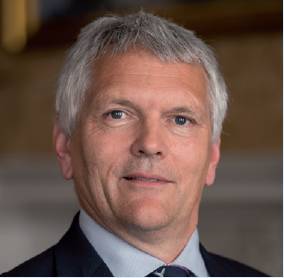 In these are difficult and uncertain times, it is good to see that a lot of the Society’s activities are continuing to function making use of digital platforms. In many cases this has enhanced the reach of a lot of our events.
In September I chaired the latest in our series of ‘Academic Summits’ and was very pleased that attendees from all the Society’s 30+ accredited universities were able to attend. Universities have very much been in the focus in the news since the start of the new academic year but attendees were able to report that they are continuing to deliver courses in a ‘blended’ format of digital and in-person delivery to the same high standards, meeting the learning objectives required for accredited degree courses. The forum considered a number of very timely issues in the current climate: the implementation of mixed-mode curriculum delivery, lab teaching, group design projects, tutoring (particularly of first-year students) and assessment. I was impressed by some of the innovative solutions that have been implemented to deal with the ongoing situation and the feedback from the meeting confirmed that sharing experience between institutions is incredibly useful for all concerned. With on-site accreditation visits not being possible, the Society has completed our first virtual professional development scheme accreditation visit in October and will also be undertaking two virtual academic accreditation visits in November. The latter will be followed up with a shortened site visit at some later date in order to award the full accreditation period.
One of the Society’s strategic aims is to disseminate and facilitate impartial and authoritative knowledge and information to a broad audience and, as part of this goal, some of our Specialist Groups have been busy recently. I was able to participate in the seventh RAeS Aircraft Structural Design conference, hosted using our new conferencing tool, both as a technical paper presenter and, also, as a participant in the panel session held at the end of the conference. The quality of the presentations, and the internationally renowned keynote speakers, was as good as in previous editions. It was interesting to hear how advanced structural designs and manufacturing methods will be required to help enable the march towards zero-emissions flight; such environmentally friendly designs will not be achieved by simply replacing kerosene with batteries or hydrogen-based powerplant. Congratulations to the Structures and Materials Specialist Group for putting on this excellent event.
ONE OF THE SOCIETY’S STRATEGIC AIMS IS TO DISSEMINATE AND FACILITATE IMPARTIAL AND AUTHORITATIVE KNOWLEDGE AND INFORMATION TO A BROAD AUDIENCE
The Rotorcraft Specialist Group organised a ‘Hovering Ambition’ panel event where the discussion was focused on the future of rotary-winged aircraft. The aim of the evening was to enthuse and excite a wide audience about the opportunities that the rotorcraft industry has to offer and to provide some insight as to where the industry may be heading. The discussion covered a wide range of fascinating and timely topics, including: reducing emissions and noise, automation and novel configurations. This is the sort of event that all Specialist Groups should consider putting together using the digital medium, attracting a broad audience and not just technical specialists in their particular discipline.
Readers of this column will remember that in the summer I signed a MoU between the Society and the AIAA to work together in areas of mutual interest, which includes a remit to facilitate the generation of knowledge. I was pleased to hear that the Aerodynamics SG have been working with their counterparts in the AIAA to organise a Drag Prediction Workshop (you’ll have to wait until 2022 though for it to happen) aiming to improve the Prediction of Shock Induced Separation in Transonic Conditions. This activity will consist of a series of test cases to be circulated between participants and the workshop will consider the results obtained using a range of different computational approaches.
Finally, I am pleased that the Society’s Autumn recruitment fair, now entering its 14th year, will take place in the beginning of November. The event will be held virtually, enabling attendees from all over the world to engage with the industry companies and representatives to explore the vast opportunities available in aerospace and aviation. This annual event is a great example of how we can bring together our strong industry partnerships and thriving network of members to interact with students and graduates seeking apprenticeships and graduate employment, and also more experienced professionals and service leavers looking to make their next career move.
OUR CHIEF EXECUTIVE
Sir Brian Burridge
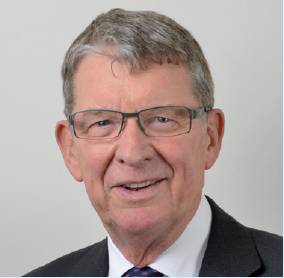 › With increased Covid restrictions across Europe, there is little solace for airlines as they continue to burn through cash at a predicted total rate of £230,000 per minute. Meanwhile, IATA pointed out that ‘the crisis is growing longer and deeper than anybody could have imagined.’ The peak summer period when European airlines score most of their profits saw industry revenue levels at just 25% of those in 2019 leaving little in reserve for the normal winter slowdown. Air navigation service providers will likewise suffer several lean months.
› In response, the UK Government is shortly to publish an aviation recovery strategy in recognition that the sector is recovering from an unprecedented shock and facing an uncertain future. The Government says that it is committed to maintaining a thriving and competitive aviation sector. To that end, the strategy is likely to cover: the return to growth of the sector; workforce and skills; regional connectivity and freight; innovation and regulation; consumer issues; climate change and decarbonisation; health, safety and security; and the critical role that aviation plays in retaining the UK’s global reach. A tall order perhaps but vital, nevertheless.
› Related to this, our recent consultation response to the Government’s Comprehensive Spending Review (CSR) contained ten key asks. We seek financial support to the sector through the Covid-19 crisis, increased funding for a National Space Programme and a range of financial measures to improve apprenticeships. We also helped shape the response of The National Engineering Policy Centre which included a call for investment in Sustainable Aviation Fuels. You can read both documents on the Society website at www.aerosociety.com/policy. Similar points were included in our letter of welcome to the new Aviation Minister, Robert Courts MP, a former member of the Transport Select Committee and a member of the Air League Council.
MEANWHILE, WE HAVE BEEN CLIMBING-UP THE LEARNING CURVE OF OUR VIRTUAL CONFERENCE PLATFORM WITH CONSIDERABLE SUCCESS
› Meanwhile, we have been climbing-up the learning curve of our virtual conference platform with considerable success. More akin to running a TV station than a traditional conference, the format is so much more inclusive. In the first three events, we have drawn international expert contributors and global audiences. The innovative platform allows networking with fellow delegates with sponsors positioned in a virtual lounge where visitors can interact directly with the companies. You can also catch-up on anything you missed from the recordings (see ‘Safeguarding space virtual conference report’ p 36). Worth attending soon will be the Climate Change conference on 3-4 November and the President’s Conference on 25-26 November entitled Digital Technologies to Enable the Future Aerospace Industry. The Branches, too, have been very successful in adapting to the virtual lecture environment, adding much value to our learned output.
› As for careers events, Yeovil Branch graduates and apprentices from Leonardo Helicopters are organising a ‘live broadcast’ Cool Aeronautics event in November. It contains an ambitious programme of STEM talks, experiments and hands-on activities from its site, going live to over 450 primary school pupils in the local area. Our thanks go to Leonardo and the programme sponsor, AAR, for their continued support. Also, our annual careers and recruitment fair goes virtual for the first time on 4 November, supported by our Club Class partner Boeing.
› For Corporate Partners, we have online briefings coming-up by Professor Sir Charles Bean on 30 November entitled, ‘Covid, Brexit and the UK’s Economic Prospects’ and, on 14 December, Professor Michael Clarke’s whose title is: ‘The Integrated Defence and Security Review: Grasping or Missing Generational Change?’ We are also now well advanced on the creation of the 2021 programme. All members will wish to note in diaries that the 2020 Wilbur and Orville Wright Lecture will take place virtually on 2 December. The speaker is Michele Evans, Executive Vice President Aeronautics at Lockheed Martin.
› It is a sad fact that, given the difficult times which confront us, we lost a number of staff on redundancy at the end of October. You will see elsewhere in this edition that among them are three who have given particularly long and highly-valued service: Gail Ward (Events), Steve Smith (Venue) and Brian Riddle (Chief Librarian). Overall, we have lost 14 staff since March some of whom were on temporary contracts covering maternity leave, which now leaves a staff cohort of 36 posts. We wish all those who have left our best wishes for the future, particularly those who have served the Society for an extended period.
› Finally, Council nominations are upon us. Members interested in standing for Council in the 2021 election to be held next spring can now find the details at www.aerosociety.com/councilelection. At a time of both uncertainty caused by the pandemic and the opportunity for transforming the Society’s operations, this is a chance for you to contribute.